

In the world of manufacturing and distribution, success in B2B eCommerce is measured by your ability to drive profitable growth and operational efficiency through your online channel. One of the most effective ways to achieve this is through B2B eCommerce personalization—the process of shaping the online buying experience around the specific processes, contracts, and roles of your business customers.
However, let’s be clear about the type of personalization that actually moves the needle in B2B. It isn't about using a customer’s first name when they log in or offering a discount on their birthday. While those B2C “touches” are fine, true personalization in B2B eCommerce is about data precision. It is about leveraging your ERP and CRM data to make it easier for a customer to order, ship, and pay. It’s about ensuring that when a buyer logs into your site, they don't face a "one-size-fits-all" storefront. They should see an environment built to help them find what they need and place orders quickly.
The Opportunity for Mid-Market Manufacturers and Distributors
The gap between manufacturing giants, their distribution counterparts, and the mid-market is closing. Large enterprises currently represent 58% of the eCommerce personalization software market because they have had the capital to to invest in those technologies.
However, that is no longer the case. Platforms built specifically for midsize manufacturers, distributors, and wholesalers now make it possible for the midmarket to provide an equally personalized online experience, leveling the playing field.
Your ERP and CRM Are the Brains of Your Personalized eCommerce Site
The biggest hurdle to a successful site is the data. In fact, half of all surveyed businesses reported that acquiring precise data for personalization remains a persistent challenge. Many companies mistakenly believe they must build an entirely new database to support a personalized eCommerce site, but for most manufacturers and distributors, the solution is much simpler: the precise data you need is already available. It’s sitting in your back-end systems. .
Your ERP and CRM hold your pricing rules and tiers, product data, warehouse locations, customer account data, order histories, warranty records and so much more. A B2B eCommerce platform should connect directly to these systems so you don’t have to manage and sync multiple, redundant data sets. This allows you to operate online using the same rules, pricing logic, and workflows that drive your business offline.
Types of B2B eCommerce Personalization
Now let’s get practical. The following list highlights 8 ways your eCommerce site can be personalized to meet your customers’ needs.
1. Personalized Catalogs
Customers should only see the products they are eligible or authorized to purchase in your online catalog, at both the account and user level. By using ERP data, your site can enforce these rules automatically.
- Location-Based Product Restrictions: In many industries, where a customer is located determines what they can legally buy. For example, if a pesticide is legal in Missouri but restricted in Texas due to state regulations, your site should automatically exclude it for Texas buyers. This ensures you remain compliant and prevents your team from having to manually intercept and cancel orders that cannot legally go through.
- Warehouse-Based Availability: Product visibility can be tied to the distribution center serving a customer’s region. Showing only inventory available from the assigned warehouse avoids inaccurate lead times and unnecessary cross-country shipping.
- Contract-Specific Product Views: Many customers only have access to a defined set of items, products, parts, or components.. Instead of navigating a full catalog, they should see only what you have approved them to see.
2. AI-Powered Search That Understands What Customers Mean
If a buyer types "1/2 inch zinc bolt" your site should return the correct product, even if it’s listed as “Hex bolt, zinc-plated grade 5 steel, .5 in. - 13x2.” If your search shows "No Results" you’ve probably lost a sale. Personalized search has to be intelligent enough to bridge the gap between technical data and how customers actually describe products.
- Handling Variations in Language and Units: Search should account for synonyms, unit variations, and common misspellings. “Half-inch,” “1/2 in,” and “.5 inch” should all return the same results.
- Real-Time Results and Filtering: For large catalogs, results should update as users type, with filtering and sorting built in so they can narrow down options quickly.
- No Dependency on Exact Matches: Customers should be able to find products without knowing exact part numbers or naming conventions.
3. Customer-Specific Pricing and Fees
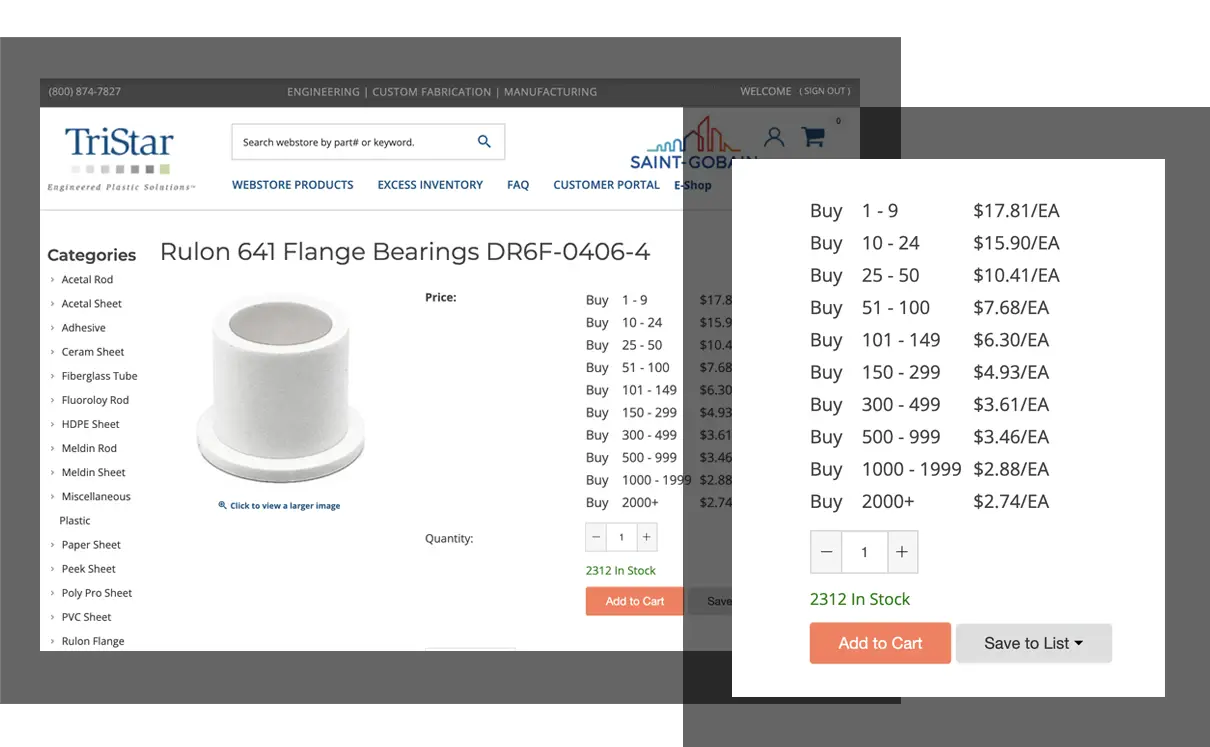
In B2B, pricing is rarely standard. Your site should reflect the pricing and fee structures already defined in your ERP.
- ERP-Driven Pricing Tiers: Pricing pulled directly from your ERP ensures that customer-specific agreements—based on account, volume, location, or other factors—are reflected online.
- Automated Fees and Surcharges: Charges like credit card fees, small-order fees, or cross-border logistics costs should be calculated and displayed automatically at the line-item or order level.
- Control Over Promotions: Discounts and promotions should follow defined rules, whether tied to order volume, specific products, or customer status.
4. Replacement Handling for Discontinued Items
When products are retired or replaced, customers should not hit a "Product Not Found" dead end. Your site should automatically map discontinued items to their replacements so customers can continue ordering without interruption.
5. Account Structure and Purchasing Permissions
B2B purchasing involves multiple roles with defined responsibilities. Your site should reflect how your customers manage purchasing internally.
- Role-Based Permissions and Approval Workflows: You can mirror your customers' internal hierarchies by setting specific permissions for different users under a single account. For example, a technician or foreman could build a cart and submit it for review, while final approval and PO submission is handled by a procurement manager.
- Custom Checkout: Checkout should enforce how you want each customer to pay and ship. This includes credit terms, PO requirements, credit limit validation, and comprehensive list of approved shipping companies.
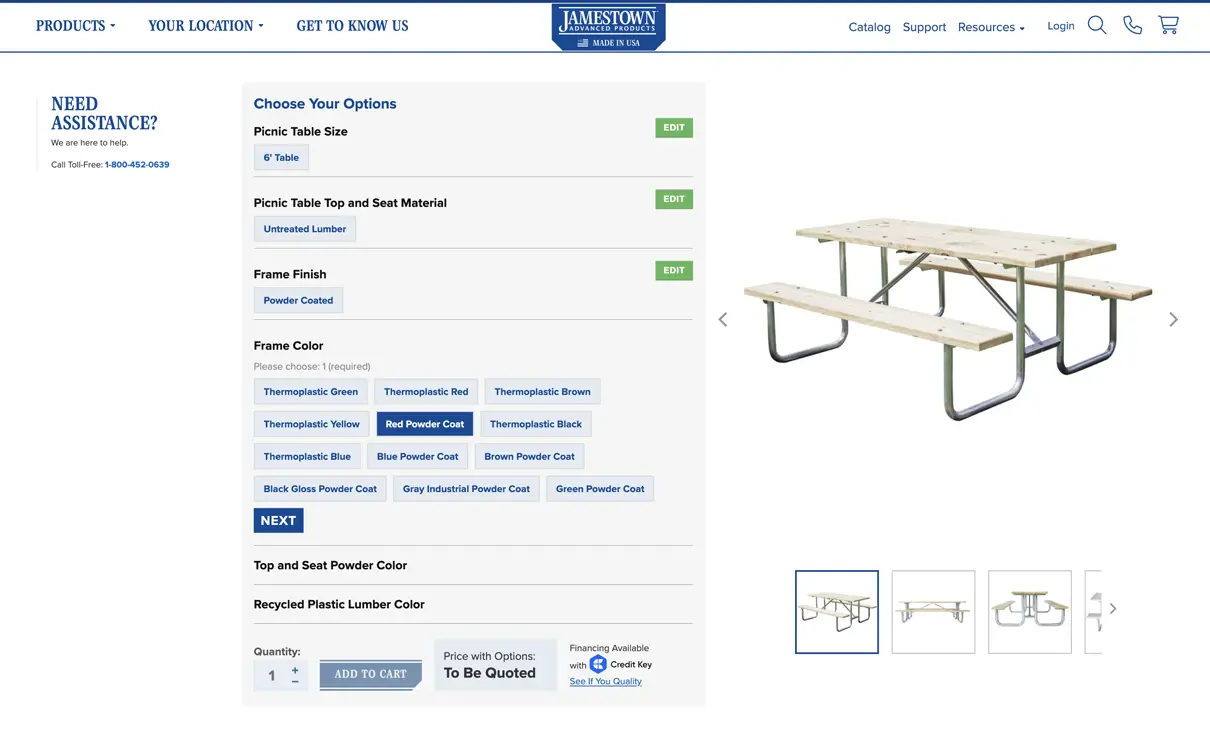
6. Product Configuration for Build-to-Order Items
For complex products, your site should guide customers through valid configurations while ensuring accuracy
- Rule-Based Configuration: Product options should follow constraints defined in your ERP to prevent invalid combinations.
- Real-Time Feedback: As customers select options, updates should reflect those choices so they know exactly what they are ordering.
- Order and Quote Handling: Standard configurations can move directly to checkout, while complex builds can route into a quoting process for review.
7. Flexible Ordering and Reordering
Customers interact with your site differently, so it should support multiple ways to place and repeat orders. Whether they browse, enter SKUs directly, upload a purchase order, or reorder from history or saved lists or shared lists, each method should reflect how that specific customer buys.
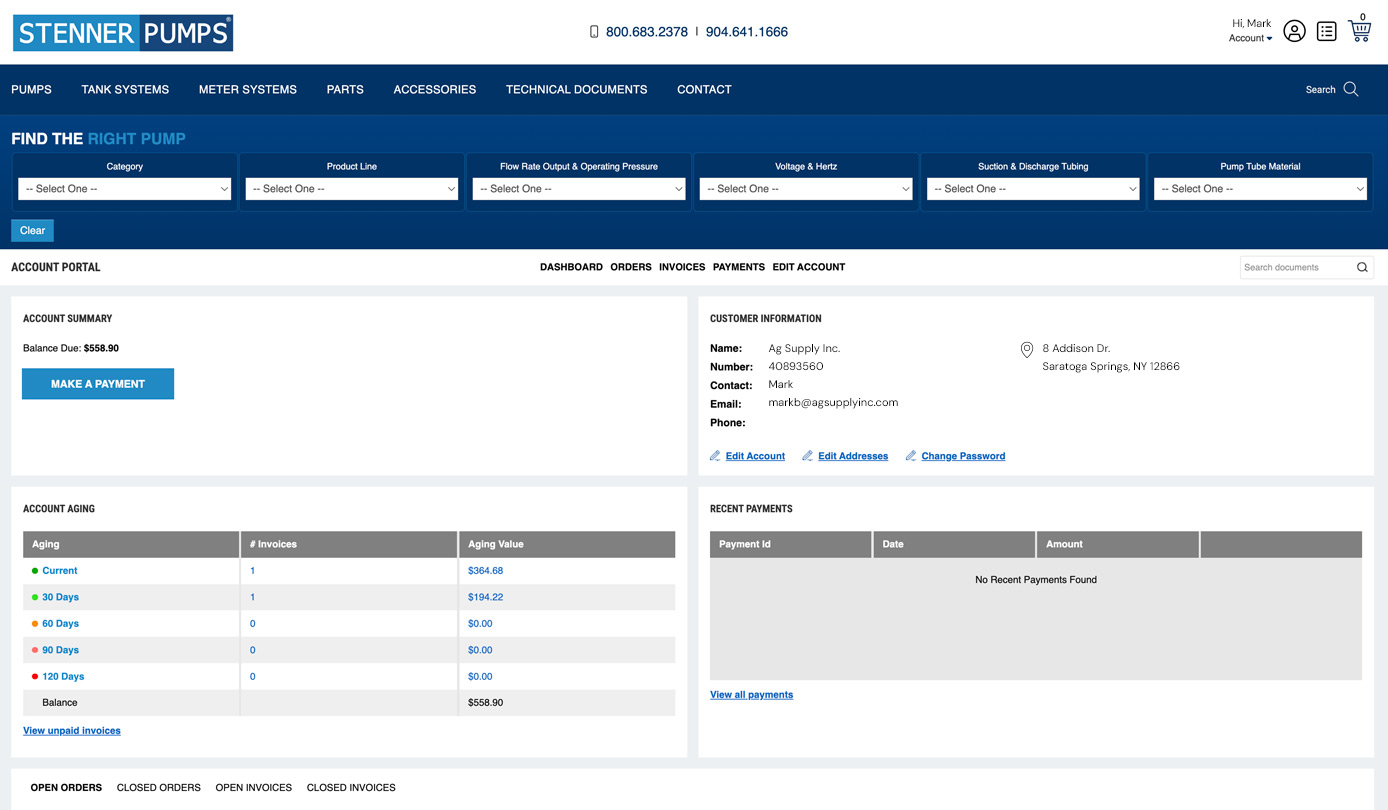
8. Account-Specific Payment Portals
Personalization extends beyond ordering into how each customer manages their account. When a user logs into their portal, they should see their invoices, balances, payment terms, and payment options—not a generic experience. Different users within the same account can have different levels of access, so not everyone sees financial details or has permission to make payments. This ensures each user interacts with the portal based on their role while still reflecting the customer’s specific account setup.
The Bottom Line
Personalized B2B eCommerce is about removing the friction that slows down ordering and causes errors. While B2C personalization often focuses on softer touches like promotions or on-site experiences, B2B personalization goes deeper. It reflects how your customers actually buy—what they see and order, how they order and checkout, and how they pay.
And the basis of all this is full integration to your ERP and CRM. It is what allows your customers to see the right thing every time they log in, without anyone having to step in and manually assist.
That level of consistency doesn’t come from layering tools on top of each other. It comes from using an eCommerce platform designed to support personalized experiences from the start.